
Restoring lost volume has traditionally involved one of two choices: an injectable filler or a surgical fat transfer. Fillers are convenient, but they are made from materials such as hyaluronic acid or calcium hydroxylapatite and gradually wear off. Fat grafting uses your own tissue and can create long-lasting, natural-looking fullness, but it begins with liposuction and comes with a surgical recovery.
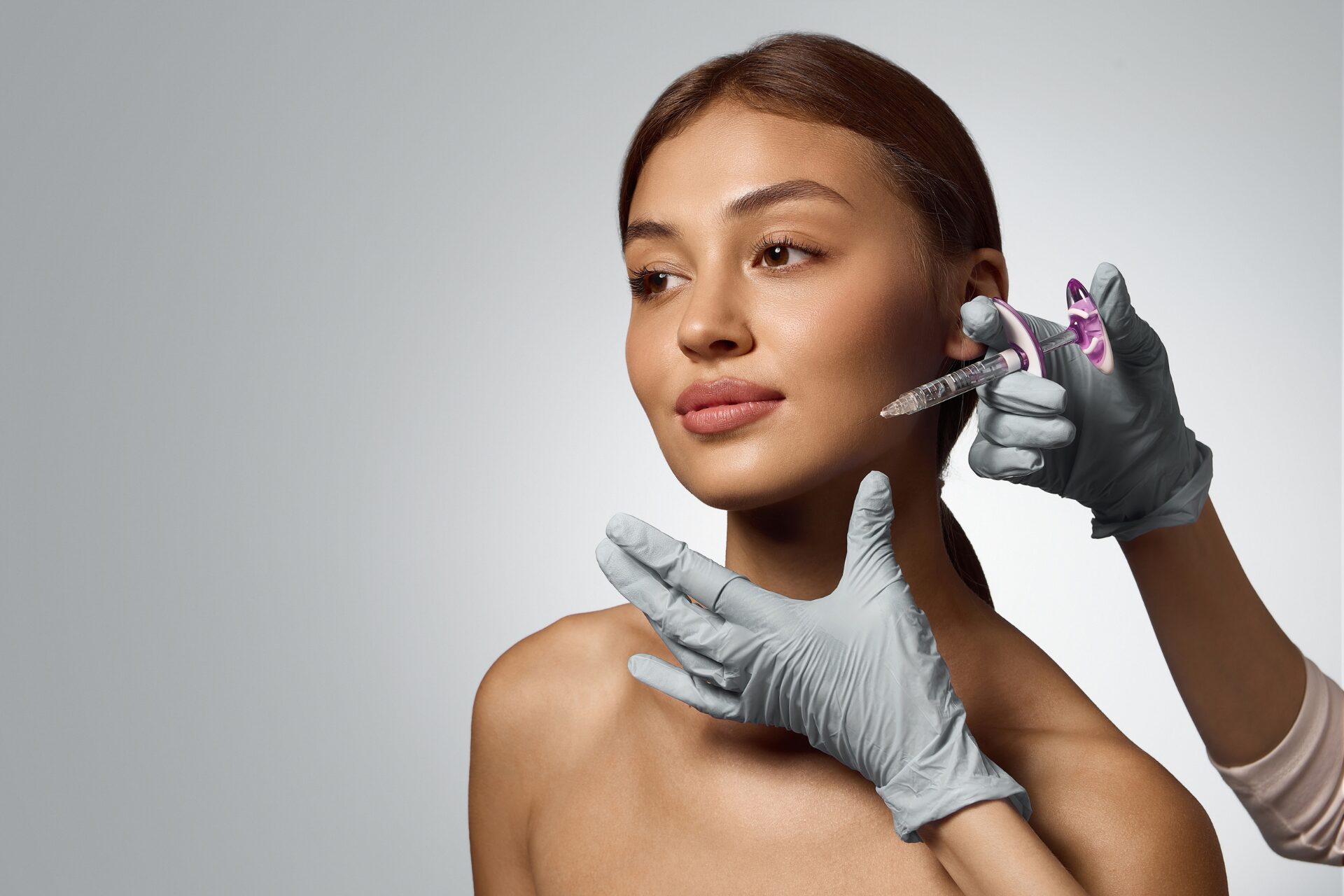
Renuva offers another option. This injectable adipose matrix is designed for small-volume correction in areas where fat naturally exists. It does not require a donor area, liposuction, or an operating room. Instead, it provides a framework that supports your body as it gradually repopulates the treated area with its own cells and blood supply.
That makes Renuva especially interesting for someone who likes the idea of restoring volume with fat but does not need, or is not ready for, a surgical fat transfer.
First, What Is Renuva?
Renuva is made from donated human adipose tissue that has been processed to preserve its extracellular matrix. That matrix contains the structural components naturally found around fat cells, including collagen, proteins, and growth factors. The donor cells are removed during processing, leaving a scaffold that can be precisely injected into an area with inadequate or damaged fat tissue.
After treatment, the matrix supports cellular repopulation and vascularization at the injection site. Put more simply, Renuva creates a framework for your body to remodel the area with living tissue. The change develops gradually, rather than appearing as the final result immediately after the appointment.
Although Renuva is administered by injection, it is not a traditional dermal filler. Its role is to restore the type of soft, natural volume normally provided by fat.
How Traditional Fat Grafting Works
Fat grafting, also called fat transfer, uses fat taken from your own body. A plastic surgeon first performs liposuction in an area such as the abdomen, waist, hips, or thighs. The harvested fat is then processed and carefully placed in another area to restore fullness or improve shape.
One advantage of this approach is scale. Because the surgeon can harvest and transfer a larger amount of fat, fat grafting may be better suited to more substantial volume enhancement or to a treatment plan that also includes body contouring. It can be used alone or combined with procedures such as a facelift, breast surgery, or a mommy makeover.
The tradeoff is that it is surgery. Even when the desired enhancement is relatively small, the process still requires a donor site, liposuction, and recovery from both the area where fat was removed and the area where it was placed.
The Biggest Difference: Renuva Skips the Harvesting Step
Renuva does not move fat from one part of your body to another. Because the adipose matrix is ready for use, treatment can be performed in the office without first harvesting your own fat.
For the right concern, that can mean:
- No liposuction or donor-site incisions
- No need to have enough harvestable fat elsewhere on the body
- A shorter, in-office treatment instead of an operation
- Less disruption to work, exercise, and everyday routines
- Gradual, subtle volume restoration that integrates with the surrounding tissue
Temporary swelling, tenderness, redness, bruising, pain, or irritation can still occur after treatment. Renuva is also made from donated human tissue, so its risks, contraindications, and screening considerations are different from those of a filler made in a laboratory or a transfer of your own fat. A consultation is important for determining whether it is appropriate for your health history and treatment area.
Where Renuva May Fit Best
Renuva is intended for areas where fat naturally exists and is generally most useful when the goal is targeted, small-volume correction rather than a dramatic change. Depending on your anatomy and treatment plan, it may be considered for concerns such as:
- Age-related volume loss in areas of the face, such as the cheeks or smile lines
- Loss of fullness in the backs of the hands
- Small contour depressions or asymmetries
- Irregularities that remain after liposuction or another body-contouring procedure
- Selected cellulite dimples or areas where the underlying fat layer is uneven
It can also be helpful for patients who have very little body fat available to harvest. In that situation, even a modest fat transfer may be difficult to perform without creating unnecessary donor-site treatment.
Renuva is not a weight-loss treatment, a substitute for liposuction, or a nonsurgical way to create unlimited volume. Placement is limited to appropriate areas where native fat belongs, and the amount needed may require more than one treatment session.
When Fat Grafting Is Still the Better Choice
Calling Renuva a nonsurgical alternative to fat grafting does not mean the two treatments are interchangeable.
Fat grafting may make more sense when you want a larger change, when liposuction is already part of your surgical plan, or when several areas need meaningful volume. For example, a patient who wants body contouring plus fuller curves may benefit from removing unwanted fat and strategically transferring it during the same surgery.
Renuva may be the more practical choice when the concern is localized and the amount of volume needed is relatively small. It may also appeal to someone who wants to avoid surgery, does not have enough donor fat, or would prefer a gradual change with less downtime.
The best option depends less on which treatment sounds easier and more on the size, location, and nature of the correction you want.
What to Expect From Renuva Results
Renuva is not designed to deliver an instant final result. Some early fullness may be related to the injected material and normal post-treatment swelling. As the area remodels, improvement develops over the following weeks and months.
Because Renuva supports the formation of living tissue, results are intended to look and feel like the surrounding fat. The amount of correction, the pace of improvement, and the number of sessions needed vary by treatment area and by patient. Your result may also change with normal aging and significant weight fluctuations, just as the rest of your fat tissue can.
This gradual process can be a benefit for patients who prefer a subtle enhancement that does not announce that they had a procedure.
Choosing Between Renuva and Fat Transfer
A useful consultation should answer three questions: How much volume is actually missing? Is there a suitable donor area for fat harvesting? And how much treatment and recovery make sense for the result you want?
At Washingtonian Plastic Surgery, Dr. Navin Singh offers both nonsurgical volume restoration and surgical fat grafting. Having access to both approaches allows the treatment plan to start with your anatomy and goals rather than with a predetermined product.
If you are interested in restoring a small area of lost volume without liposuction, Renuva may offer the middle ground you have been looking for. Schedule a consultation at Washingtonian Plastic Surgery in McLean, Virginia, to learn whether Renuva or fat grafting is the better fit for you.

Dr. Navin Singh is a dual board-certified plastic and facial plastic surgeon and founder of Washingtonian Plastic Surgery. He previously served as Director of Cosmetic Surgery at Johns Hopkins University School of Medicine and currently serves as a board examiner for both the American Board of Plastic Surgery and the American Board of Facial Plastic and Reconstructive Surgery. He has authored numerous peer-reviewed publications and has been recognized as a Top Doctor by Washingtonian Magazine.